
KAVORA Market Note / India
India's Residential Market Is Moving Upmarket
India's residential market is entering a more mature phase, with the strongest momentum increasingly concentrated in premium and luxury housing rather than the mass-market segment.
October 2026 / India real estate
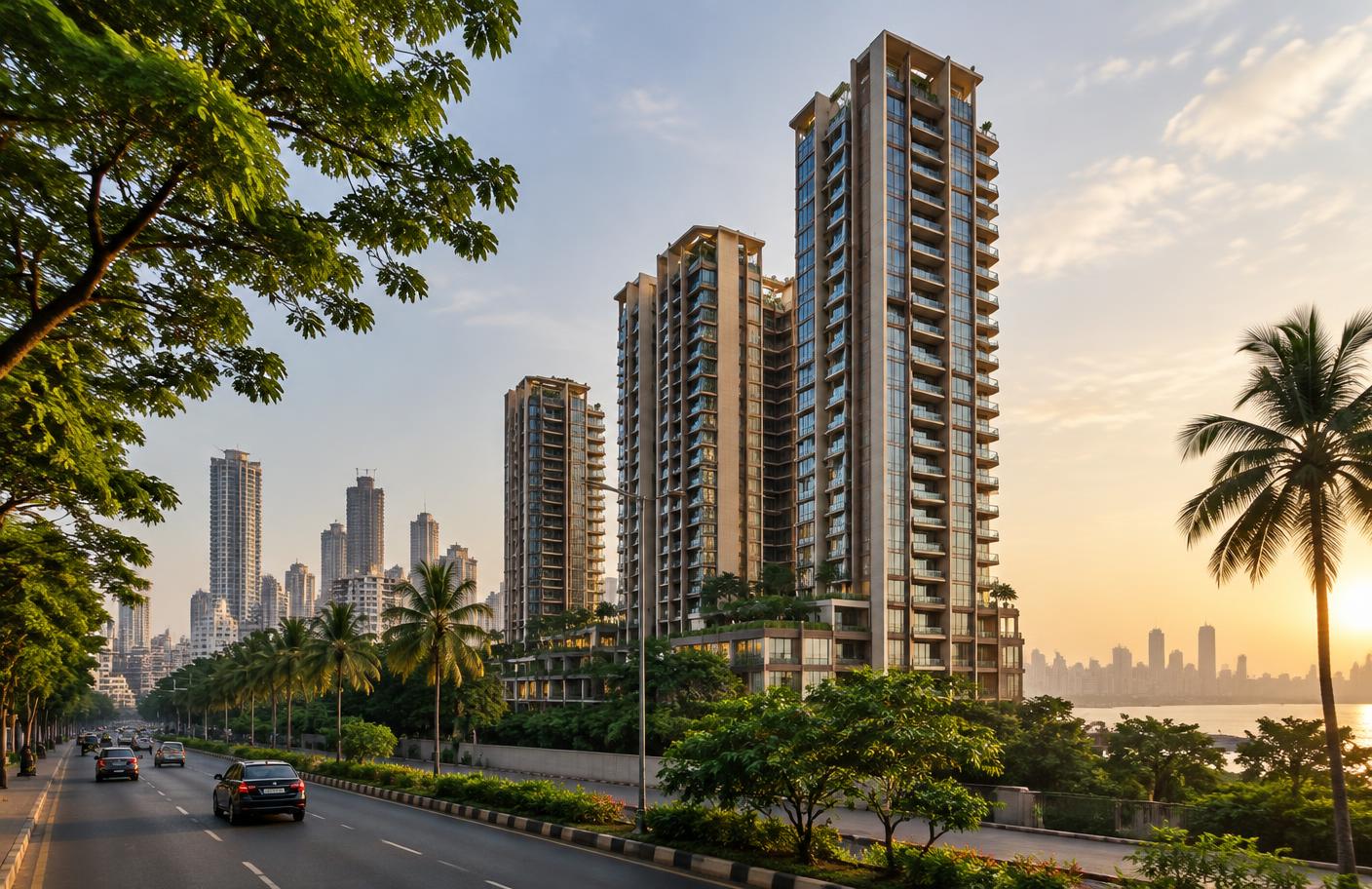
The most important story is not simply how many homes are being sold. It is what buyers are choosing to buy.
JLL reported that residential sales across India's top seven cities reached 70,631 units in Q1 2026, an 8% year-on-year increase. More significantly, homes priced at ₹1 crore and above accounted for 71% of sales, compared with 59% in Q1 2025. Sales of homes above ₹1 crore increased approximately 30% year-on-year.
This continues a trend already visible during 2025. JLL reported that homes priced above ₹1 crore represented approximately 62% of sales in H1 2025, compared with 51% a year earlier.
Source: JLL, Q1 2026; as quoted in the supplied KAVORA market note. Percentages reproduced from the supplied market note.
What is driving the premiumisation?
Several factors appear to be reshaping buyer behaviour:
- Larger homes
- Affluent buyers are showing greater preference for spacious residences and higher-quality developments.
- Location
- Prime micro-markets with strong infrastructure, connectivity and established social infrastructure continue to attract attention.
- Developer credibility
- Buyers are increasingly placing importance on the reputation and execution capability of developers.
- Lifestyle
- The definition of a premium home is evolving beyond size and location to include amenities, technology, design, wellness and professionally managed environments.
- Wealth creation
- India's expanding affluent population is creating a larger pool of buyers able to consider higher-value residential assets.
JLL's Q1 2026 analysis found that residential prices across India's major cities increased by approximately 8% to 20% year-on-year, although performance varied considerably between cities and micro-markets.
The Supply Story Is Changing Too
The premiumisation trend is also visible on the supply side.
JLL recorded 90,023 new residential launches in Q1 2026, a 13% year-on-year increase. Within those launches, properties priced above ₹1 crore accounted for an increasing share of new supply.
CBRE's Q2 2026 market monitor recorded more than 61,000 residential sales and approximately 63,800 new units launched during the quarter. CBRE also noted the continued strengthening of the high-end segment.
This suggests a market where developers are increasingly aligning new supply with the preferences of higher-value buyers.
What Does This Mean for Buyers?
For buyers, the growing choice at the premium end creates both opportunity and complexity.
A higher-priced property is not automatically a better property.
Location, developer track record, project quality, construction progress, surrounding infrastructure, resale liquidity, maintenance standards and the relationship between price and comparable properties all deserve consideration.
For NRI and international buyers in particular, the decision can involve additional questions around financing, taxation, ownership structures, repatriation and local regulations.
The opportunity is therefore not simply finding a property.
It is finding the right property for the objective.
Explore India properties